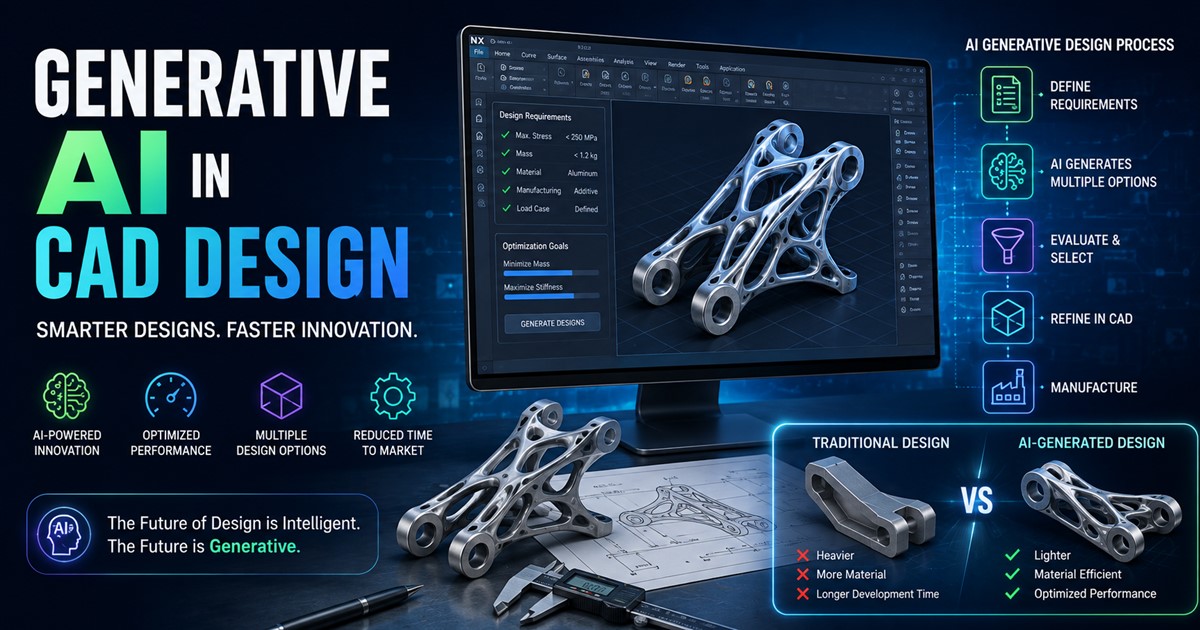


Artificial intelligence is changing the 3D industry faster than many people expected. AI tools can now create basic 3D objects from text prompts, images, sketches, and other references. They can speed up tasks such as concept creation, texture generation, image rendering, and even parts of the modeling process.
This raises an important question for designers, architects, game developers, manufacturers, and businesses: Will AI replace 3D artists?
The short answer is probably no. AI is more likely to change the role of 3D artists than completely remove it. While AI can handle some repetitive and simple tasks, professional 3D work often requires design judgment, technical knowledge, accuracy, creativity, communication, and an understanding of the client’s goals.
In the future, the strongest 3D artists may be those who know how to use AI effectively while still bringing human skills to the project.
What Can AI Do in 3D Modeling?
AI-powered 3D tools have developed quickly. Depending on the software, AI can help create a starting model, generate textures, produce materials, improve images, or turn a 2D reference into a rough 3D object.
For example, a designer may describe a chair and use an AI tool to create an early concept. Instead of starting with an empty scene, the artist can begin with an AI-generated idea and then improve it.
AI can also help with tasks such as:
- Generating early 3D concepts
- Creating basic shapes from text or images
- Generating textures and materials
- Creating variations of an existing design
- Supporting lighting and rendering workflows
- Removing repetitive manual work
- Creating quick prototypes
- Helping artists explore different design directions
These abilities can save time, especially during the early stages of a project. However, producing a useful result is not always as simple as entering a prompt and accepting whatever the AI creates.
Why AI-Generated 3D Models Are Not Always Enough
An AI-generated model can look impressive while still having serious technical problems. A model may have incorrect proportions, poor topology, unwanted geometry, missing details, or other issues that make it unsuitable for professional use.
For a simple visual concept, these problems may not matter much. For manufacturing, architecture, product development, games, animation, or engineering, accuracy can be extremely important.
A professional artist can examine the model, understand what needs to change, and rebuild or refine it according to the project’s requirements.
| AI Strength | Human Strength |
|---|---|
| Fast concept generation | Creative direction and decision-making |
| Rapid design variations | Understanding client requirements |
| Automating repetitive tasks | Technical accuracy and quality control |
| Generating basic assets | Detailed modeling and refinement |
| Fast experimentation | Problem solving and project judgment |
AI vs. Traditional 3D Modeling
Traditional 3D modeling usually involves creating geometry manually using specialized software. The artist controls dimensions, topology, curves, surfaces, materials, and other elements based on the project’s requirements.
AI-assisted modeling works differently. The artist may provide a prompt, image, drawing, or other reference, and the AI generates a result. The artist can then edit, optimize, or rebuild that result.
Neither approach is automatically better for every project. The right method depends on the required quality, accuracy, budget, deadline, and final use of the model.
For a deeper comparison, businesses can also review AI 3D modeling vs. traditional 3D modeling before choosing a workflow.
Why Human 3D Artists Still Matter
There are several reasons professional 3D artists are likely to remain important even as AI becomes more capable.
1. Artists Understand the Client’s Goal
A client does not always know exactly how to describe what they need. They may provide sketches, photographs, measurements, product references, or a general idea.
A skilled artist can ask the right questions and turn that information into a useful 3D result. This involves communication and judgment, not just software skills.
2. Professional Projects Need Accuracy
Many 3D models are created for more than visual presentation. They may be used for manufacturing, engineering, construction, product development, or technical documentation.
In these situations, dimensions and construction details can matter greatly. An attractive model that does not match the required specifications may have little practical value.
For example, 3D modeling for manufacturing often requires careful attention to dimensions, components, materials, and production requirements.
3. Complex Models Need Human Problem Solving
Complex projects often contain unusual shapes, multiple components, technical constraints, or specific design requirements. When something goes wrong, someone needs to understand why it happened and determine the best solution.
Human artists can make decisions based on experience and project context. They can decide whether a model should be rebuilt, simplified, optimized, or adjusted.
4. Quality Control Is Still Important
AI can generate results quickly, but speed does not guarantee quality. Professional work needs review.
An artist can inspect geometry, materials, textures, lighting, proportions, and other elements before the final model is delivered. This quality-control step can be especially important when the model will be used commercially.
Will AI Reduce the Demand for 3D Artists?
AI may reduce demand for some types of basic 3D work. Simple assets, early concepts, and repetitive tasks may become faster to produce with AI.
That does not necessarily mean the overall demand for 3D professionals will disappear. Instead, the type of work may change.
For example, a client who previously needed several days to create an early concept may be able to produce several concepts in a few hours with AI assistance. The artist can then spend more time improving the strongest concept.
This could move the role of a 3D artist from purely manual production toward a combination of:
- Creative direction
- AI-assisted modeling
- Technical modeling
- Model cleanup
- Optimization
- Rendering
- Animation
- Quality control
- Client communication
AI Can Make 3D Artists More Productive
One of the biggest opportunities is productivity. Instead of viewing AI only as a replacement for artists, it can be viewed as another tool in the artist’s workflow.
Imagine an artist working on a product visualization. AI could help generate several initial design directions. The artist could select one, refine the geometry, apply accurate materials, improve the lighting, and create the final presentation.
The artist is still responsible for the final result, but AI reduces the amount of time spent on certain early-stage tasks.
This approach can be particularly useful for businesses that need many variations of products or marketing visuals.
AI and Architectural 3D Modeling
Architecture is another area where AI can assist but is unlikely to eliminate the need for skilled professionals.
AI can help visualize design ideas and produce early concepts. However, architectural projects often involve dimensions, building elements, materials, site conditions, construction requirements, and client revisions.
A professional workflow may also involve CAD and BIM data. These requirements make human review and technical expertise important.
For businesses working on architectural projects, architectural 3D modeling can support accurate visual communication while allowing designers and clients to review a project before construction.
AI in Product Modeling
Product modeling is another field where AI can be useful. A company may have product photographs, sketches, or reference materials and want to create a digital 3D model.
AI may help create a starting point, but the final model may need significant refinement. The model could be used for product renders, online stores, advertisements, product configurators, animations, or interactive viewers.
For example, an e-commerce company may need multiple product angles and variations. A professional 3D workflow can create consistent assets that can be reused across different marketing channels.
Companies interested in this area can explore 3D product modeling for e-commerce to understand how digital models can fit into an online sales strategy.
What About Game Artists?
Game development may experience significant changes from AI. AI can already help developers create concepts, textures, environments, characters, and other assets more quickly.
However, game-ready models have specific technical requirements. Polygon counts, topology, UVs, textures, rigging, animations, and performance can all affect how an asset works inside a game engine.
A model that looks good in an image is not automatically a good game asset. Artists still need to understand the technical requirements of the target platform and engine.
Will Entry-Level 3D Jobs Change?
This is one of the areas where AI could have a noticeable impact. Some beginner-level tasks may become automated or require fewer hours.
However, beginners who learn AI tools alongside traditional 3D skills may have an advantage. Instead of competing directly with AI, they can learn how to use it to become more productive.
Learning fundamentals remains important. Understanding modeling, topology, lighting, materials, composition, rendering, and design principles gives artists the knowledge needed to identify and fix problems in AI-generated work.
What Skills Will 3D Artists Need in the Future?
The future 3D artist will likely need a combination of artistic, technical, and AI-related skills.
| Skill | Why It Matters |
|---|---|
| 3D modeling | Provides control over professional-quality geometry |
| Texturing and materials | Helps create realistic and useful surfaces |
| Rendering | Turns models into strong visual presentations |
| AI tools | Improves speed and supports experimentation |
| Problem solving | Helps handle complex project requirements |
| Communication | Helps translate client ideas into useful results |
| Technical knowledge | Ensures models work for their intended purpose |
AI Will Probably Change the Workflow, Not Remove the Artist
The most realistic future is not AI versus 3D artists. It is AI plus 3D artists.
AI can become another tool in the production process. Artists can use it for brainstorming, reference generation, repetitive work, and early-stage experimentation while keeping control over important creative and technical decisions.
This is similar to what happened with other digital tools. New software changed how creative professionals worked, but it did not eliminate the need for people who understand design and production.
As AI becomes better, clients may also expect faster delivery and more design variations. Artists who can combine traditional expertise with modern AI workflows may be able to meet those expectations more efficiently.
How Businesses Should Approach AI 3D Modeling
Businesses should not choose AI simply because it is new or fast. The first step is to understand what the final model will be used for.
If the model is only needed for a rough concept, AI may be enough for the initial stage. If it will be used for manufacturing, construction, animation, games, e-commerce, or other professional applications, additional modeling and quality control may be necessary.
A practical workflow can combine AI generation with professional human refinement. This gives businesses the speed of AI while maintaining control over the final result.
Frequently Asked Questions
Will AI completely replace 3D artists?
It is unlikely that AI will completely replace 3D artists. AI can automate certain tasks, but professional projects often require creativity, technical accuracy, problem solving, communication, and quality control. These human skills remain valuable.
Can AI create a complete 3D model?
AI can create 3D models from different types of input, depending on the tool. However, the output may require cleanup, optimization, retopology, texturing, scaling, or other adjustments before it is suitable for professional use.
Is AI 3D modeling better than traditional modeling?
Neither method is always better. AI can be faster for concepts and repetitive tasks, while traditional modeling provides greater control. A hybrid workflow can often provide a good balance between speed, control, and quality.
Should 3D artists learn AI tools?
Yes. Learning AI tools can help artists improve productivity and explore more ideas. However, artists should continue developing core 3D skills because those skills help them evaluate, correct, and improve AI-generated results.
Will AI make 3D modeling cheaper?
AI may reduce the time required for some tasks, which can lower production costs in certain situations. However, the final price still depends on project complexity, accuracy, revisions, modeling requirements, rendering, and the level of professional expertise needed.
Final Thoughts
So, will AI replace 3D artists? AI will almost certainly replace some repetitive 3D tasks, but replacing the entire role of a professional 3D artist is a much bigger challenge.
The future is more likely to involve collaboration between people and AI. AI can generate ideas quickly, automate repetitive work, and help artists move through the early stages of production faster. Human artists can provide creative direction, technical knowledge, accuracy, problem solving, and final quality control.
For businesses, this means the best 3D workflow may not be purely traditional or purely AI-generated. A combination of the two can provide a practical balance between speed and professional quality.
As AI technology continues to develop, 3D artists who learn how to use these tools while maintaining strong modeling fundamentals may be in the best position to succeed. AI is changing the 3D industry, but for now, it is better understood as a powerful tool for artists rather than a complete replacement for them.
If you need professional help turning a concept, drawing, product, or architectural idea into a usable 3D asset, you can contact a 3D modeling team to discuss your project requirements.