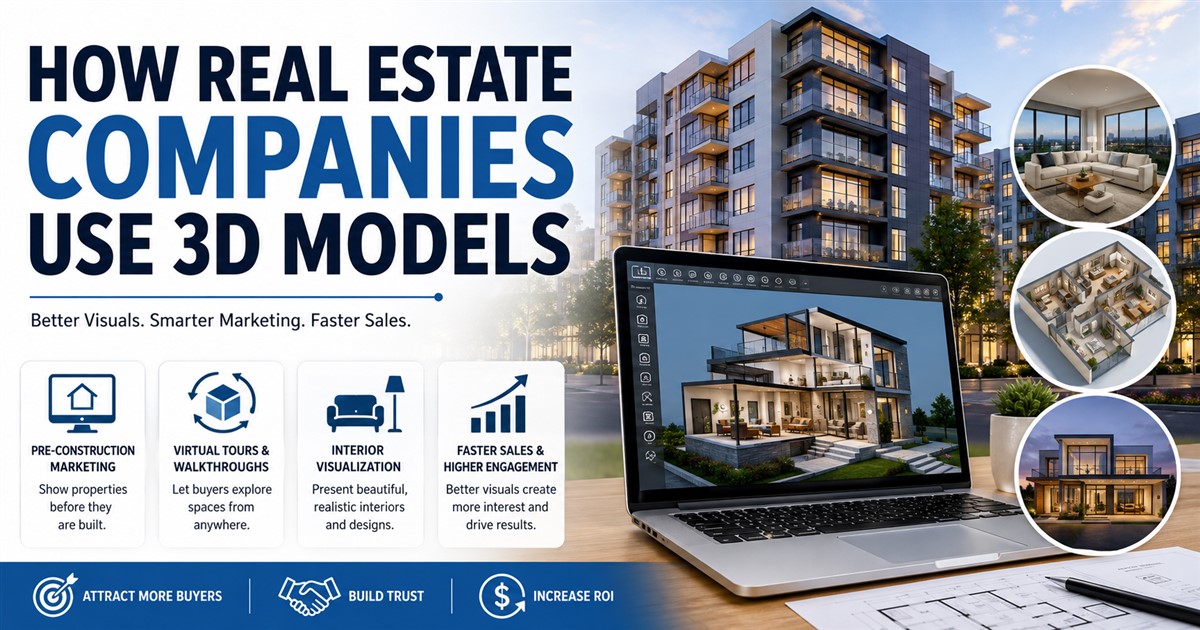
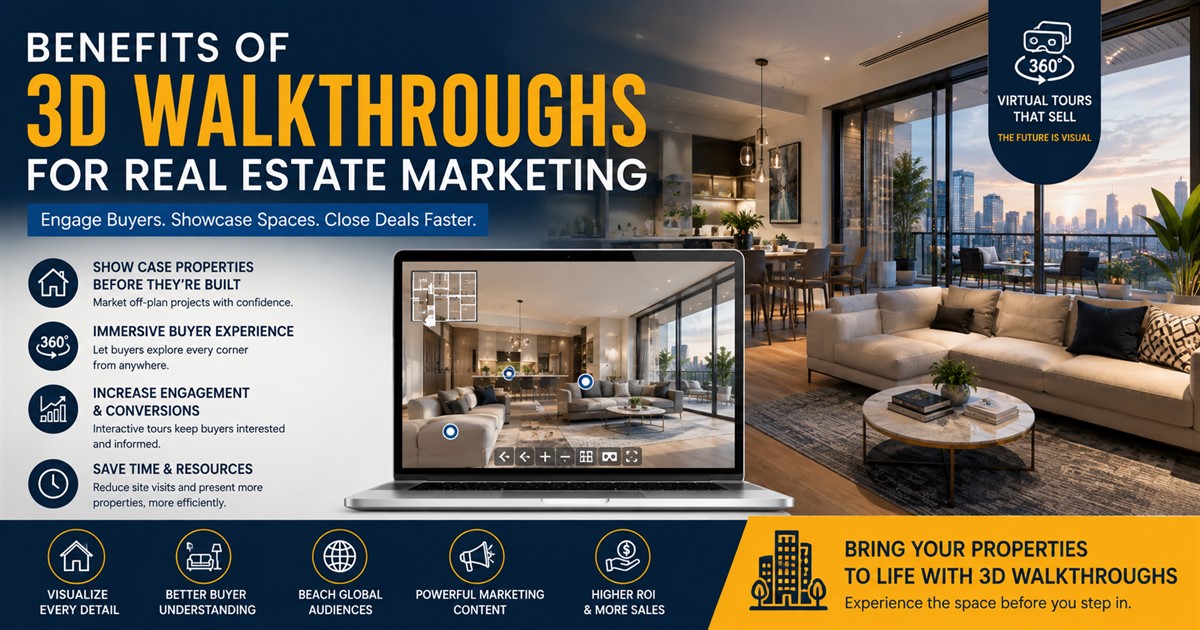

Real estate marketing has changed significantly as buyers now expect more than simple photos and floor plans. When people are looking for a home, apartment, office, hotel, or commercial property, they want to understand the space before making a decision. This is where 3D walkthroughs for real estate marketing can make a major difference.
A 3D walkthrough allows potential buyers to explore a property digitally. Instead of looking at a few static images, they can move through rooms, view different areas, understand the layout, and get a better idea of how the finished property may look.
This technology is especially useful for properties that are still under construction. Developers can create a digital version of a future property and use it to market homes or commercial spaces before construction is finished.
In this guide, we will explain the main benefits of 3D walkthroughs for real estate marketing, how they work, where they can be used, and why developers, agents, and property marketers are increasingly using them.
What Is a 3D Walkthrough?
A 3D walkthrough is a digital presentation that lets viewers explore a property in a virtual environment. The walkthrough is created from a detailed 3D model of the building or space.
The model can include walls, doors, windows, floors, ceilings, furniture, lighting, materials, landscaping, and other important details. The 3D artist then creates a camera path or interactive experience that allows the viewer to move through the property.
Depending on the project, a 3D walkthrough can be presented as a video, interactive virtual tour, 360-degree experience, or real-time 3D environment.
For example, a property developer could create a walkthrough of a future apartment before construction is complete. A potential buyer could see the entrance, living room, kitchen, bedrooms, bathrooms, balcony, and other areas through a digital presentation.
If you need a detailed digital property model before creating a walkthrough, architectural 3D modeling services can help turn drawings and plans into a usable 3D environment.
Why 3D Walkthroughs Matter in Real Estate Marketing
Real estate is a visual industry. Buyers want to see what they are purchasing, but traditional marketing materials often have limitations.
Photos show individual areas, while floor plans show measurements and layouts. A 3D walkthrough combines many of these benefits into one experience.
Instead of asking buyers to imagine how rooms connect, a walkthrough can show the complete journey through the property.
| Traditional Marketing | 3D Walkthrough |
|---|---|
| Static photographs | Interactive or moving visual experience |
| Limited viewpoints | Multiple viewpoints |
| Requires imagination | Shows the space more clearly |
| Harder to visualize unfinished properties | Can show properties before construction |
| Separate images for different rooms | One connected property experience |
1. Show Properties Before Construction Is Finished
One of the biggest benefits of 3D walkthroughs is that they can be created before a property physically exists.
This is extremely useful for real estate developers selling apartments, houses, offices, hotels, and commercial properties during the planning or construction stage.
A developer does not have to wait months or years for a building to be completed before showing buyers what it will look like.
A 3D walkthrough can present the planned property using architectural drawings and design information. Buyers can then explore the proposed layout and get a better understanding of the final design.
This can support pre-launch and off-plan property marketing, giving sales teams attractive visual material while construction is still underway.
2. Help Buyers Understand the Property Layout
Floor plans are useful, but not everyone can easily understand a two-dimensional drawing.
A buyer may see a floor plan showing several rooms but still have difficulty imagining the size, connection, and flow of the space.
A walkthrough makes this easier. Buyers can virtually move from the entrance into the living room, kitchen, bedroom, bathroom, or other areas.
This helps viewers understand how the spaces connect with each other.
For large properties, this can be particularly useful because there may be many rooms and multiple floors to understand.
3. Create a More Engaging Buying Experience
Static property images can provide useful information, but an interactive walkthrough encourages users to spend more time exploring.
Instead of scrolling through a gallery, potential buyers can follow a visual journey through the property.
This creates a more engaging experience and can make the property easier to remember.
For marketing teams, this can also provide more opportunities to present important features such as large windows, balconies, open kitchens, spacious living areas, landscaped gardens, parking areas, and amenities.
4. Increase Buyer Confidence
Buying property is a major decision. Buyers want as much information as possible before committing to a purchase.
A detailed walkthrough can provide a clearer view of the proposed property than a small collection of images.
When buyers can explore the layout and understand the relationship between spaces, they may feel more informed about the property.
For an unbuilt development, the walkthrough can also help reduce the uncertainty that comes with purchasing something that cannot yet be physically visited.
5. Improve Off-Plan Property Sales
Off-plan properties present a unique marketing challenge. The buyer is often asked to purchase a property before they can walk through the finished building.
3D walkthroughs help solve this problem by creating a digital representation of the planned property.
Developers can use walkthroughs in:
- Property websites
- Sales offices
- Real estate presentations
- Social media campaigns
- Digital advertisements
- Investor presentations
- Property exhibitions
- Email marketing
- Online property listings
High-quality visuals can help sales teams communicate the project more effectively before construction is complete.
6. Showcase More Than Just the Building
A 3D walkthrough does not have to focus only on the interior of a building.
The experience can include the surrounding environment and important amenities.
For example, a residential development walkthrough could show:
- The main entrance
- Lobby
- Living areas
- Kitchens
- Bedrooms
- Bathrooms
- Balconies
- Swimming pools
- Gardens
- Parking areas
- Gyms
- Community areas
This allows marketers to present the property as a complete experience rather than simply a collection of rooms.
7. Make Marketing Content More Flexible
Once the 3D environment has been created, it can often be used to produce different types of marketing content.
For example, the same model may be used to create still renders, walkthrough videos, close-up images, 360-degree views, website visuals, social media content, and presentations.
This gives real estate companies more value from the original modeling investment.
Businesses can also explore broader applications of 3D models in marketing to understand how digital models can support different promotional campaigns.
8. Support Remote Property Viewing
Not every buyer can visit a property in person.
Potential buyers may live in another city, another country, or simply have limited time for physical property visits.
A digital walkthrough gives them a way to explore the property remotely.
This can be especially useful for:
- International property buyers
- Busy professionals
- Investment properties
- Vacation homes
- New developments
- Commercial properties
A walkthrough cannot replace every physical visit, but it can help buyers decide whether a property deserves further consideration.
9. Improve Real Estate Website Content
Property websites need strong visual content to attract and retain visitors.
Instead of relying only on photos and text, developers can add interactive 3D experiences to their websites.
A walkthrough can become a central part of a property landing page. Users can explore the property while also reviewing pricing, floor plans, amenities, location information, and contact details.
Interactive content can make a property website feel more modern and informative.
For websites that need more interactive 3D experiences, a 3D viewer for websites provides another way to let users explore digital models directly online.
10. Make Complex Properties Easier to Explain
Some properties are difficult to explain using photographs alone.
Large office buildings, hotels, shopping centers, hospitals, apartment complexes, and mixed-use developments can have many connected areas.
A walkthrough can guide the viewer through the property in a logical order.
For example, a hotel walkthrough might begin at the entrance, move through the lobby, show guest rooms, restaurants, meeting spaces, fitness areas, and finally the outdoor facilities.
This creates a simple visual story that can be easier to understand than dozens of disconnected photographs.
11. Help Buyers Compare Design Options
3D environments can also be useful before the final design is approved.
Developers and architects can create different versions of a property and compare design choices.
| Design Element | Possible Variations |
|---|---|
| Wall colors | White, gray, beige, or other colors |
| Flooring | Wood, stone, tile, or carpet |
| Furniture | Modern, classic, minimalist, or luxury |
| Lighting | Daylight, warm lighting, cool lighting |
| Exterior materials | Brick, concrete, wood, glass, or stone |
| Landscaping | Different plants, trees, paths, and outdoor layouts |
Showing these options visually can help project teams make decisions before construction begins.
12. Create a Stronger Emotional Connection
Real estate is not only about measurements and specifications. Buyers also need to imagine themselves living or working in a space.
A well-designed walkthrough can help create that connection.
For a residential property, the walkthrough might show a family entering the home, moving through the living space, and seeing the kitchen, bedrooms, and outdoor areas.
For a commercial property, the walkthrough can show how employees, customers, or visitors may experience the space.
When the visual presentation tells a clear story, the property can become easier for potential buyers to imagine.
13. Use 3D Walkthroughs Across Different Marketing Channels
A completed walkthrough can be adapted for different marketing platforms.
| Marketing Channel | Possible Use |
|---|---|
| Website | Interactive property tour or walkthrough video |
| YouTube | Full property walkthrough |
| Social media | Short walkthrough clips |
| Sales presentations | Guided property demonstration |
| Digital advertising | Short visual property promotions |
| Property exhibitions | Interactive property experience |
14. Reduce the Need for Repeated Physical Visits
Physical property visits remain important, but not every person who views a listing needs to visit immediately.
A walkthrough can help potential buyers understand the property before scheduling an in-person visit.
This can help sales teams focus their time on more interested prospects.
For developers marketing large projects, digital walkthroughs can also provide a consistent presentation. Every potential buyer can receive the same visual explanation of the property.
15. Support Architectural and Design Presentations
3D walkthroughs are not only useful for buyers. Architects and designers can also use them when presenting concepts to clients and project stakeholders.
A walkthrough can show how a design is expected to look and feel from a human perspective.
This can make client meetings more productive because design ideas are easier to discuss when everyone can see the same visual environment.
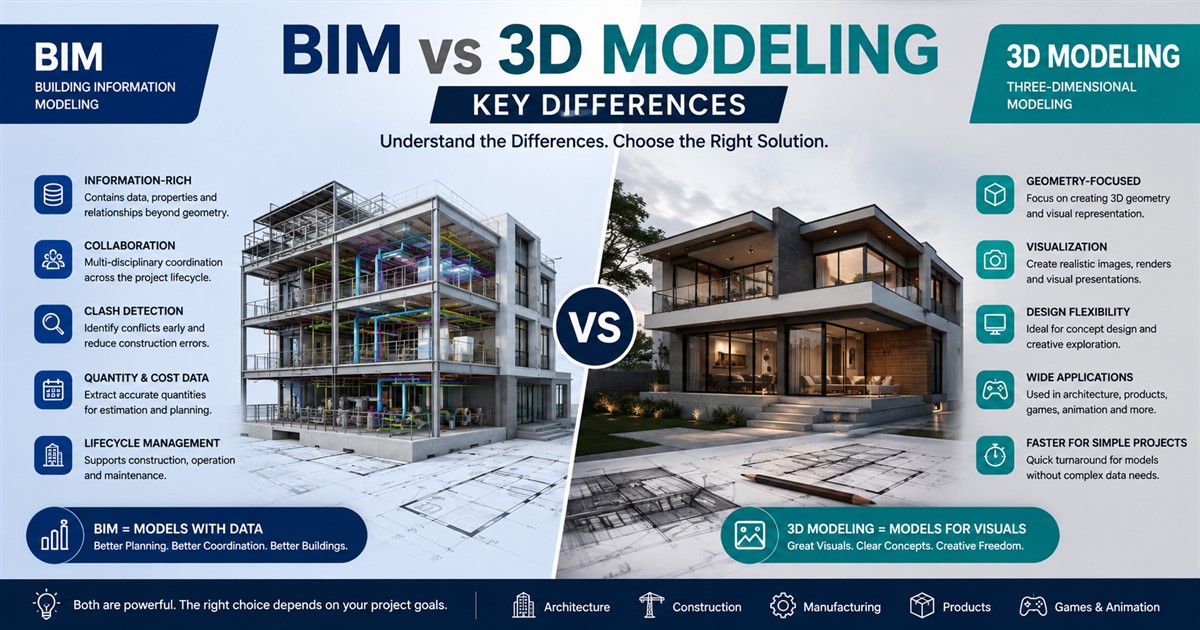
For projects that require detailed building information and coordination, BIM modeling services can provide a more information-rich digital building model that supports architectural and construction workflows.
3D Walkthrough vs. Traditional Property Photos
Traditional photography still has an important place in real estate marketing. Photos are quick to view and work well on property listing websites and social media.
However, a walkthrough provides a different type of experience.
| Feature | Property Photos | 3D Walkthrough |
|---|---|---|
| Shows individual areas | Yes | Yes |
| Shows connection between rooms | Limited | Excellent |
| Works before construction | No | Yes |
| Interactive experience | No | Can be |
| Easy to create multiple design versions | No | Yes |
| Shows real completed property | Yes | No, unless based on a real scanned/modelled space |
For a deeper comparison between digital architectural visuals and real photographs, see 3D rendering vs. architectural photography.
How Much Does a 3D Real Estate Walkthrough Cost?
The cost of a 3D walkthrough can vary widely. There is no single price because every property requires a different amount of modeling and production work.
Important pricing factors include:
- Size of the property
- Number of rooms
- Level of detail
- Number of floors
- Furniture requirements
- Exterior landscaping
- Number of camera movements
- Walkthrough length
- Interactive features
- Rendering quality
- Number of revisions
- Project deadline
For a broader understanding of 3D service pricing, you can review this guide to 3D modeling pricing factors.
A simple walkthrough of a small apartment will normally require less work than an interactive experience covering a large residential development with detailed interiors, landscaping, amenities, and multiple buildings.
How to Create an Effective Real Estate 3D Walkthrough
A successful walkthrough starts with good planning. Before production begins, define what the viewer should see and what message the walkthrough should communicate.
Step 1: Collect Project Information
Provide floor plans, elevations, CAD drawings, reference images, material specifications, furniture details, and other relevant information.
Step 2: Build the 3D Model
The building and important spaces are recreated as a digital 3D environment.
Step 3: Add Materials and Details
Textures, furniture, lighting, landscaping, decorations, and other elements are added to make the environment realistic.
Step 4: Plan the Camera Path
The walkthrough should have a logical flow. The camera can start at the entrance and move through important areas in an order that makes sense.
Step 5: Render and Review
The completed animation or interactive experience is produced and reviewed for accuracy and quality.
Step 6: Make Revisions
Any necessary changes are made before the final files are delivered.
A clearly planned 3D modeling project workflow can help keep the process organized and reduce unnecessary delays.
Tips for Making a Real Estate Walkthrough More Effective
- Start with the most important feature: Show the property feature that matters most to your target buyer.
- Keep the movement smooth: Avoid unnecessary camera movements that make the experience difficult to follow.
- Show the complete layout: Help viewers understand how rooms connect.
- Use realistic materials: Accurate textures make the property easier to understand.
- Use suitable lighting: Lighting can strongly affect the appearance of interiors and exteriors.
- Highlight amenities: Include pools, gardens, gyms, parking, balconies, and other selling points when relevant.
- Keep the target buyer in mind: A luxury apartment and a family home may need very different visual presentations.
- Use clear branding: Add branding carefully without distracting from the property.
Final Thoughts
3D walkthroughs are becoming an important tool for modern real estate marketing because they provide something traditional property images cannot always deliver: a sense of movement and space.
They can help buyers understand property layouts, explore future developments, view unbuilt spaces, compare design options, and experience properties remotely.
For developers, one of the biggest benefits is the ability to market a property before construction is complete. Instead of waiting for finished buildings and professional photographs, developers can create realistic digital environments and begin promoting the project earlier.
3D walkthroughs can also support websites, presentations, sales meetings, social media, digital advertising, and property exhibitions. When combined with high-quality renders, floor plans, photographs, and other marketing materials, they can create a complete visual strategy for a property.
The key is to build the walkthrough around the needs of the target audience. A good walkthrough should not simply show a building. It should help viewers understand the property and imagine how they could use the space.
If you are planning a real estate development and need professional 3D modeling, rendering, or walkthrough production, you can contact a 3D modeling professional with your plans and project requirements to discuss the best approach.
Frequently Asked Questions About 3D Walkthroughs for Real Estate
What is a 3D walkthrough in real estate?
A 3D walkthrough is a digital presentation that allows viewers to explore a property’s interior or exterior through an animated or interactive 3D environment.
Can a 3D walkthrough show a property before construction?
Yes. This is one of the main benefits of 3D walkthroughs. Developers can create a digital version of a planned property from architectural drawings and use it for marketing before construction is complete.
Are 3D walkthroughs useful for real estate marketing?
Yes. They can help buyers understand property layouts, explore spaces remotely, view future developments, and engage with property listings in a more visual way.
How much does a real estate 3D walkthrough cost?
Costs depend on the size and complexity of the property, the level of detail, walkthrough length, number of rooms, rendering quality, interactive features, and revision requirements.
How long does it take to create a 3D walkthrough?
The timeline depends on the project. A simple apartment walkthrough may take much less time than a detailed walkthrough covering a large residential or commercial development.
Can 3D walkthroughs be used on websites?
Yes. Depending on the format, a walkthrough can be embedded into a website as a video, interactive experience, virtual tour, or other digital presentation.
Are 3D walkthroughs better than real estate photos?
They serve different purposes. Photos show individual real spaces, while walkthroughs provide a connected experience that can help viewers understand the overall property layout. Using both can be highly effective.
Can a 3D walkthrough include furniture and landscaping?
Yes. A detailed walkthrough can include furniture, appliances, lighting, plants, trees, gardens, roads, vehicles, and other elements that help present the property.
Why are 3D walkthroughs useful for off-plan properties?
They allow buyers to explore a visual representation of a property that has not yet been built. This gives developers useful marketing content during the pre-construction and construction stages.
Can the same 3D model be used for other marketing content?
Often, yes. A properly prepared 3D model can potentially be used to create still images, animations, walkthroughs, interactive experiences, website visuals, social media content, and presentations.