
When customers shop online, product visuals can make a big difference. A clear image helps people understand what they are buying, while high-quality visuals can make a product look more professional and trustworthy. Traditionally, product photography has been the main choice for online stores. Today, 3D product models offer another powerful way to present products.
But which option is better: 3D product modeling or traditional product photography?
The answer depends on your product, budget, marketing goals, and how you plan to use the visuals. Photography can be ideal when you need realistic images of a physical product. 3D models can be more flexible because one digital model can be used for product images, animations, interactive viewers, design changes, and other marketing materials.
In this guide, we will compare 3D product models and product photography, explain their strengths and weaknesses, and help you decide which option makes the most sense for your business.
What Is a 3D Product Model?
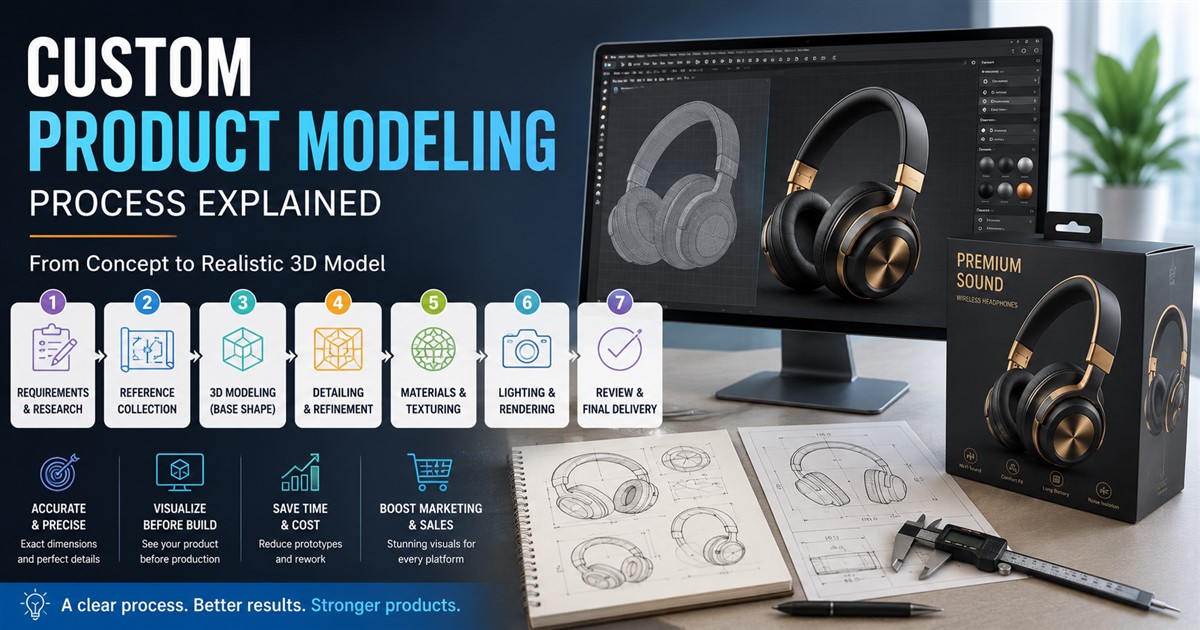
A 3D product model is a digital representation of a physical product. It is created using 3D modeling software to reproduce the product’s shape, size, details, materials, and appearance.
Once created, the model can be viewed from different angles and used to produce realistic renders. It can also be used in animations, product demonstrations, websites, apps, virtual showrooms, and other digital experiences.
For example, a furniture company can create one 3D model of a chair and use it to create images from the front, side, back, and top. The same model could also be used in a product animation or interactive 3D viewer.
If you want to learn more about the process, our 3D product modeling service explains how digital product models can be created for different business needs.
What Is Product Photography?
Product photography involves taking photographs of a physical product using cameras, lighting equipment, backgrounds, and other photography tools. The final images can then be edited and prepared for websites, online stores, catalogs, advertisements, social media, and other marketing channels.
Good product photography can show the actual appearance of a product. Customers can see its colors, surface, texture, shape, and small visual details.
For products that already exist and are ready to photograph, professional photography can be a simple and effective option.
3D Product Models vs Product Photography
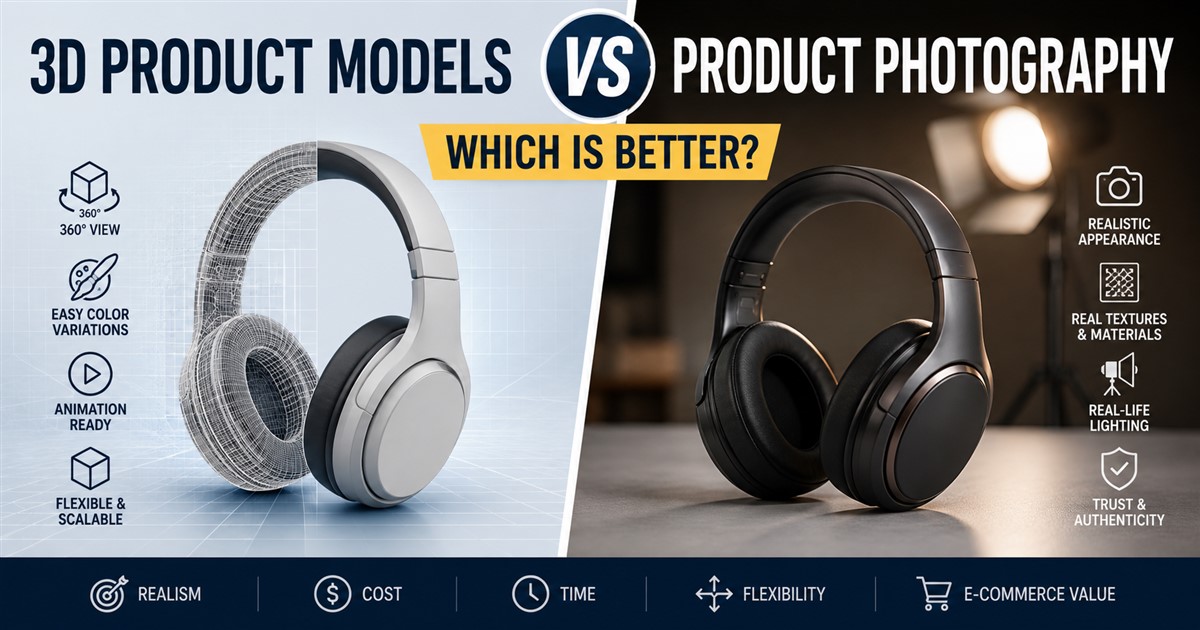
Both methods can create high-quality product visuals, but they work in different ways. Photography captures a real physical object, while 3D modeling creates a digital version of that object.
| Factor | 3D Product Models | Product Photography |
|---|---|---|
| Physical product required | Not always | Yes |
| Change camera angles | Very easy | Requires another photo |
| Change colors or finishes | Usually easier | May require another shoot or extensive editing |
| Product animation | Possible | Not directly possible from a standard photo |
| Interactive 3D viewer | Possible | Not suitable |
| Showing a product before manufacturing | Excellent option | Not possible |
| Showing real-world texture | Depends on materials and rendering | Excellent |
| Reuse across marketing | Very high | Limited by the original photographs |
1. Realism and Visual Quality
Modern 3D rendering can create highly realistic product visuals. A well-made model can include accurate materials, lighting, reflections, shadows, textures, and surface details.
However, photography has one major advantage: it captures a real physical product. This can be especially useful when the exact appearance of the physical item is important.
For example, products with complex natural materials may benefit from photography because real surfaces can have subtle variations that are difficult to reproduce digitally.
On the other hand, 3D rendering gives businesses more control over the final image. You can control the lighting, background, camera position, product color, and scene without physically moving the product.
2. Flexibility and Creative Control
This is one of the biggest advantages of 3D product models.
After creating a 3D model, you can generate different views and scenes without starting from the beginning. You can place the product in different environments, change the camera angle, create close-up shots, or prepare visuals for different marketing campaigns.
Photography is more limited. If you need a completely different angle, setup, or environment, you may need another photo session.
This makes 3D modeling particularly useful for companies that need many product visuals over time.
3. Product Changes Are Easier With 3D
Products often change during development. A manufacturer may change a handle, color, material, shape, or component before the final product is released.
With photography, these changes can mean arranging another photo shoot. With a 3D model, many changes can be made directly to the digital asset.
This can save time when products have multiple versions or configurations.
4. Showing Products Before Manufacturing
This is an area where 3D models have a major advantage.
A company can create a 3D product model before the physical product is manufactured. The model can then be used for presentations, product pages, marketing campaigns, concept reviews, and sales materials.
Photography cannot provide the same benefit because there needs to be a physical product to photograph.
For companies launching new products, this can make 3D modeling a valuable part of the product development and marketing process.
5. Cost Considerations
The cost of each option depends on the project. Product photography may involve photographers, studios, lighting, equipment, product transportation, styling, editing, and multiple shooting sessions.
3D modeling has its own costs. The complexity of the model, required level of detail, materials, textures, animation, rendering requirements, and revisions can all affect the price.
A simple product may be relatively straightforward to model, while a complex mechanical product can require much more work.
It is therefore better to compare the total project value instead of looking only at the initial price. If you need many images and marketing assets, one 3D model may provide more long-term flexibility.
For a deeper look at pricing, you can read our guide to 3D modeling pricing factors.
6. Speed and Production Time
Photography can be fast when the product is available and the shooting requirements are simple. A professional team can photograph several products during one session.
3D modeling can take longer at the beginning because the digital model needs to be created accurately. However, once the model is complete, it can be reused for many different purposes.
The project timeline depends heavily on product complexity and the required level of detail. For more information, see our guide to 3D modeling project timelines.
7. E-Commerce Product Presentation
Online stores need strong product visuals because customers cannot physically inspect the product before purchasing it.
Product photography is still an excellent choice for many e-commerce businesses. However, 3D product models can provide additional options.
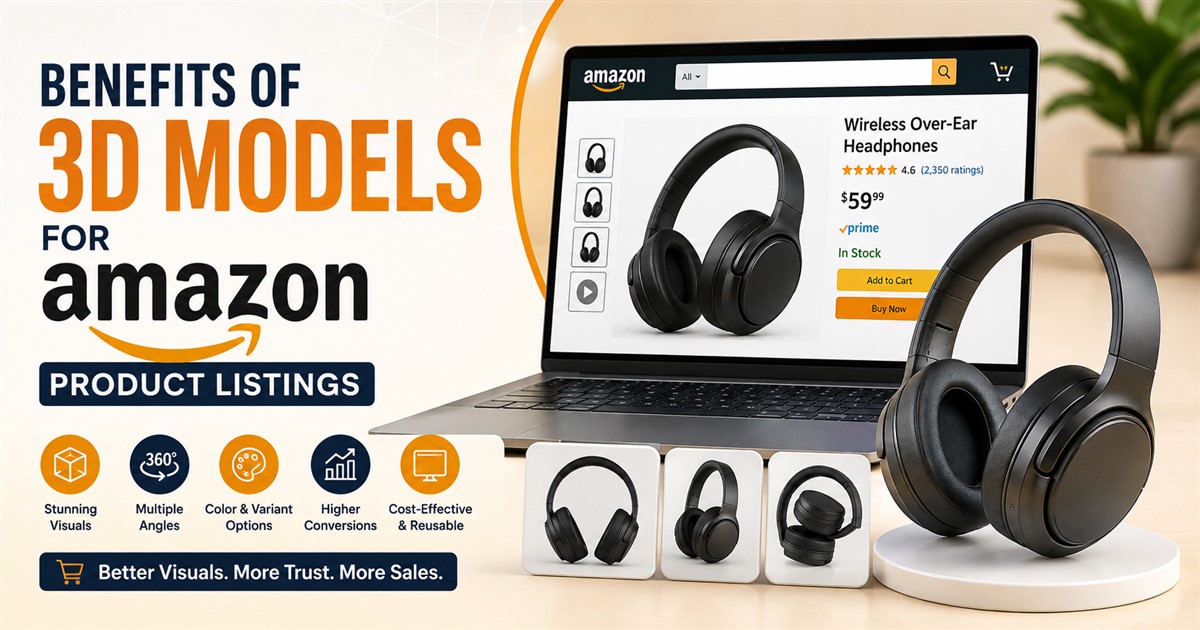
A digital model can be used to create multiple product views, detailed close-ups, lifestyle scenes, color variations, and even interactive product experiences.
For businesses focused heavily on online sales, combining 3D models with traditional product images can create a stronger visual presentation.
Our guide to 3D product modeling for e-commerce covers this topic in more detail.
8. Product Variations and Color Options
Many businesses sell products in different colors, finishes, sizes, or configurations.
Creating separate photos for every variation can require significant time and planning. With 3D modeling, different materials and colors can often be applied to the same base model.
For example, a company selling a desk in black, white, oak, and walnut finishes may be able to create several digital versions from one core model.
This makes 3D models especially useful for businesses with large product catalogs or configurable products.
9. Product Animation and Interactive Experiences
Standard product photographs are static. They can show a product from a particular angle, but they cannot demonstrate movement by themselves.
A 3D model can be used to create product animations. You can show how a product opens, rotates, operates, or fits together. This can make complex products easier to understand.
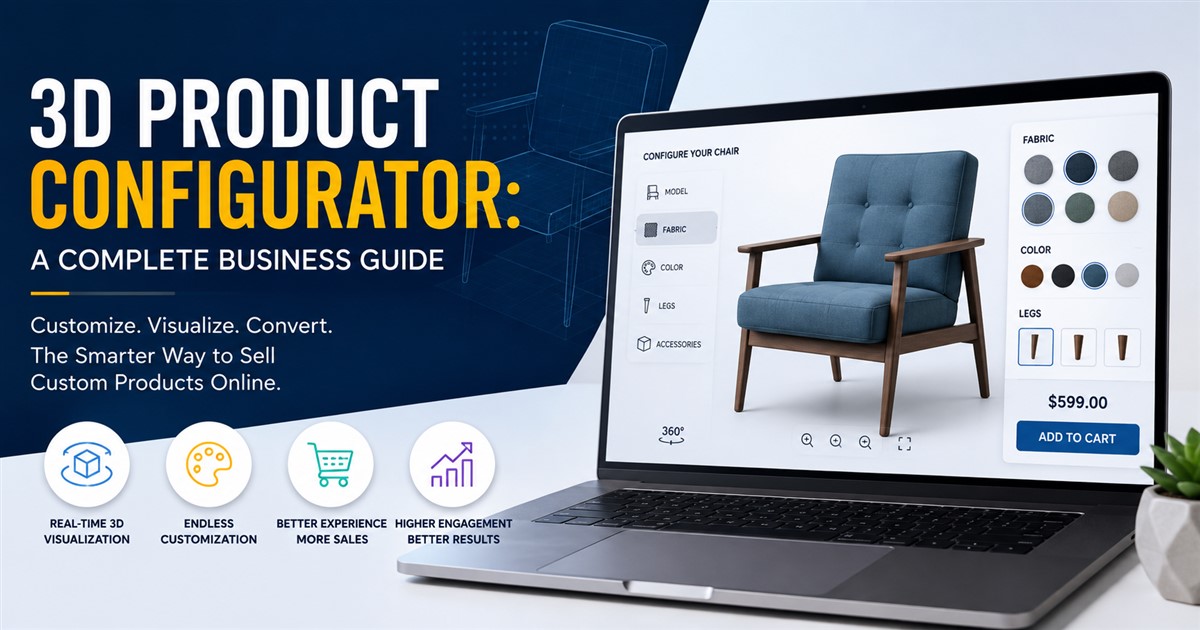
3D models can also support interactive product viewers, where customers can rotate and inspect a product from different angles.
This is particularly useful for furniture, electronics, machinery, automotive components, consumer products, and other items where shape and construction matter.
10. Which Option Is Better for Different Businesses?
| Business Type | Recommended Option | Why |
|---|---|---|
| E-commerce store | Both | Photography provides realism, while 3D adds flexibility. |
| New product startup | 3D modeling | Products can be visualized before manufacturing. |
| Furniture company | Both | 3D is useful for variations and photography shows real materials. |
| Industrial manufacturer | 3D modeling | Complex products benefit from technical visuals and animations. |
| Fashion or lifestyle brand | Photography | Real people, textures, and physical environments can matter more. |
| Product with many variations | 3D modeling | Digital variations can be created without photographing every version. |
Can You Use Both 3D Models and Photography?
Yes. In many cases, using both is the strongest approach.
Photography can show customers what the real product looks like in the physical world. A 3D model can provide additional views, product configurations, animations, technical visuals, and interactive experiences.
For example, an online furniture store could use professional photographs for its main product gallery and 3D renders for different colors and room setups. This gives customers both realism and flexibility.
The best approach depends on how your customers interact with your products and how many visual assets you need.
When Should You Choose 3D Product Modeling?
3D product modeling may be the better option when:
- Your physical product is not ready yet.
- You need visuals before manufacturing.
- Your products have many colors or variations.
- You need product animations.
- You want interactive 3D product views.
- You need images from many camera angles.
- You expect to reuse product assets for future campaigns.
- You sell complex products that need detailed visual explanations.
When Is Product Photography the Better Choice?
Photography may be the better choice when:
- The physical product is already available.
- Customers need to see the actual product.
- Real textures and materials are important.
- You need lifestyle images with real people or locations.
- Your products do not change often.
- You mainly need a small number of standard product images.
What About Long-Term Value?
One important difference is how the visual asset can be reused.
A photograph is generally tied to the specific shot that was taken. A 3D model is a reusable digital asset. Once the model is created, it can support many types of content.
You could use the same model for website images, social media graphics, product demonstrations, videos, presentations, advertising, catalogs, and interactive experiences.
This makes 3D modeling worth considering as a long-term visual asset rather than simply another way to create one product image.
Final Verdict: 3D Models or Product Photography?
There is no single winner for every business.
Product photography is a strong choice when you need realistic images of an existing physical product. It captures the actual item and can be especially valuable when real materials, textures, and environments matter.
3D product modeling is a better choice when flexibility, product variations, pre-launch visualization, animations, and reusable digital assets are important.
For many modern businesses, the best solution is not choosing one over the other. Combining professional photography with accurate 3D product models can provide a complete visual strategy.
If you are unsure which approach fits your project, consider your product availability, number of variations, marketing channels, expected number of visuals, and long-term needs before making a decision.
Frequently Asked Questions
Are 3D product models better than photography?
Not always. 3D models offer greater flexibility and can be reused for many purposes, while photography provides direct images of the physical product. The better choice depends on your project.
Can a 3D model look like a real photograph?
Yes. High-quality 3D rendering can create realistic materials, lighting, reflections, shadows, and textures. The final result depends on the quality of the model, materials, lighting, and rendering.
Can I create product images without manufacturing the product?
Yes. A 3D product model can be created from product designs, CAD files, drawings, measurements, or other available references. This allows businesses to create product visuals before physical production.
Is 3D product modeling good for e-commerce?
Yes. 3D models can be used to create product renders, different angles, color variations, lifestyle scenes, animations, and interactive product experiences.
Can one 3D model create multiple product images?
Yes. One accurate 3D model can be rendered from different camera angles and placed in different scenes. This is one of the main advantages over creating a separate photograph for every view.
Should my business use both photography and 3D modeling?
It can be a strong strategy. Photography can provide real product images, while 3D models can provide flexibility, variations, animations, and additional marketing assets.
Need 3D Product Modeling for Your Business?
If your business needs accurate and professional 3D product visuals, choosing the right modeling approach is an important first step. Think about how the models will be used today and how they could support your marketing and product needs in the future.
When you are ready to discuss your requirements, you can contact 3D Modeling Service to share your project details and discuss the type of 3D product assets you need.